A platform used by over 100,000 users didn’t clearly guide users through its services.
It provided quick access to online healthcare services — including e-prescriptions via chat and medical consultations.
It continuously expanded with new services and use cases — increasing both its capabilities and the complexity of the experience.
The platform didn’t function as a coherent experience.
Inconsistent UI patterns made the system feel like it didn’t follow clear rules.
Misaligned content made decision-making difficult — there was no guidance on what mattered at each moment.
Users:
didn’t know where to start or what to do next
didn’t understand why they were providing information or what would happen next — and lacked feedback after actions
was left alone with decisions — the system neither guided nor prevented errors
For the business, this meant:
high drop-off rates (~60%)
low completion rates across flows
negative feedback driven by failed experiences
low user retention
In healthcare, the lack of clear guidance and process communication directly impacted trust in the product.
Users weren’t guided through the process — they had to decide what to do next on their own.
Key information wasn’t communicated at the right moment, and user actions had no clear consequences.
As a result, the platform required constant interpretation instead of guiding users step by step.
This required rethinking how users enter, move through, and return to the platform.
I clarified entry into the product and made paths explicit.
The first interaction with the platform didn’t explain what options were available or where to start.
I designed the entry around clear action paths that allow users to make a decision immediately.
video
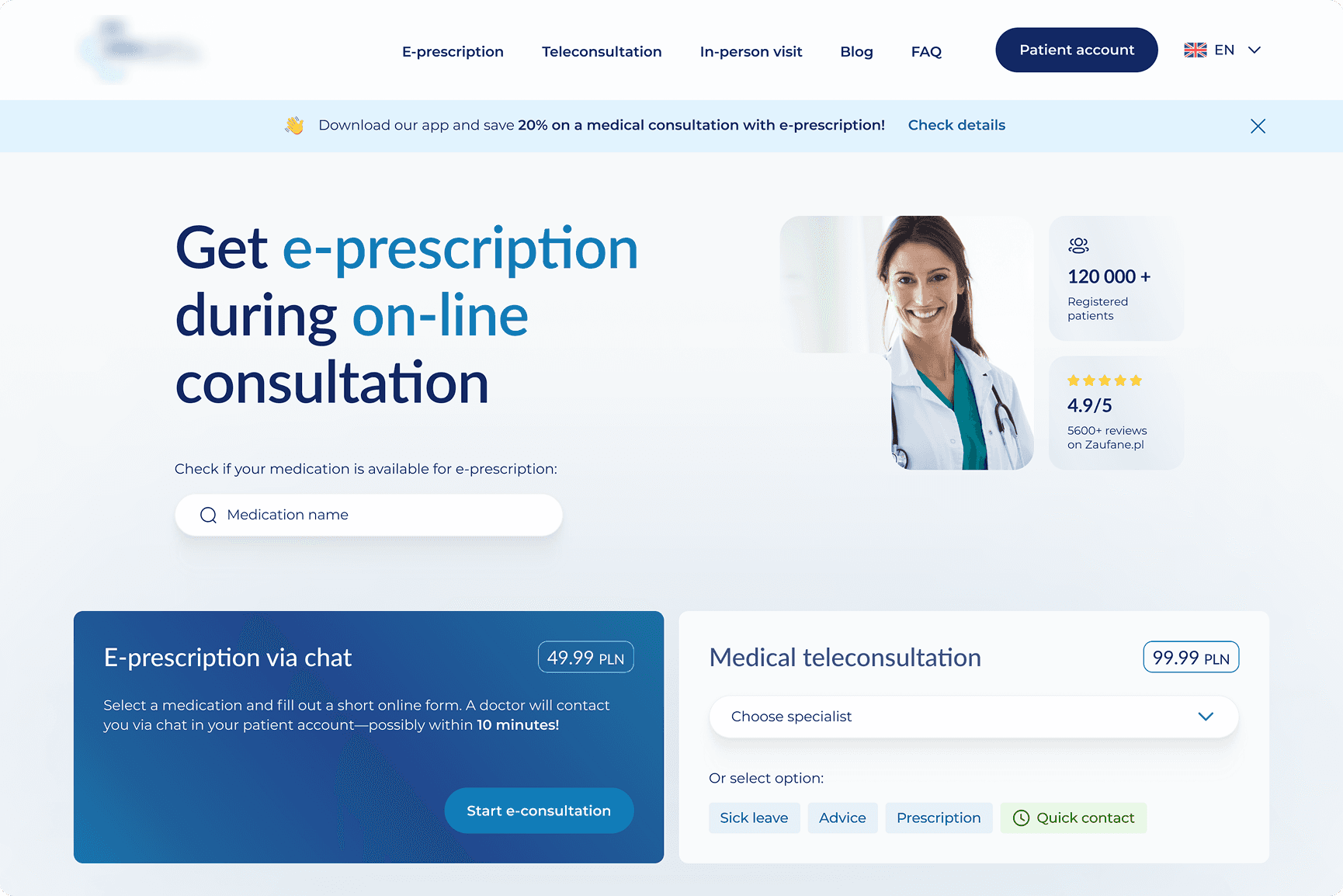
→ key services are visible immediately, without the need to search
→ users instantly see available paths
→ the structure supports decision-making instead of requiring exploration
I unified service flows into a single, coherent experience.
Processes were not connected — users moved between them without a clear logic.
I designed service flows as a unified structure, where users move through steps in a predictable and repeatable way.
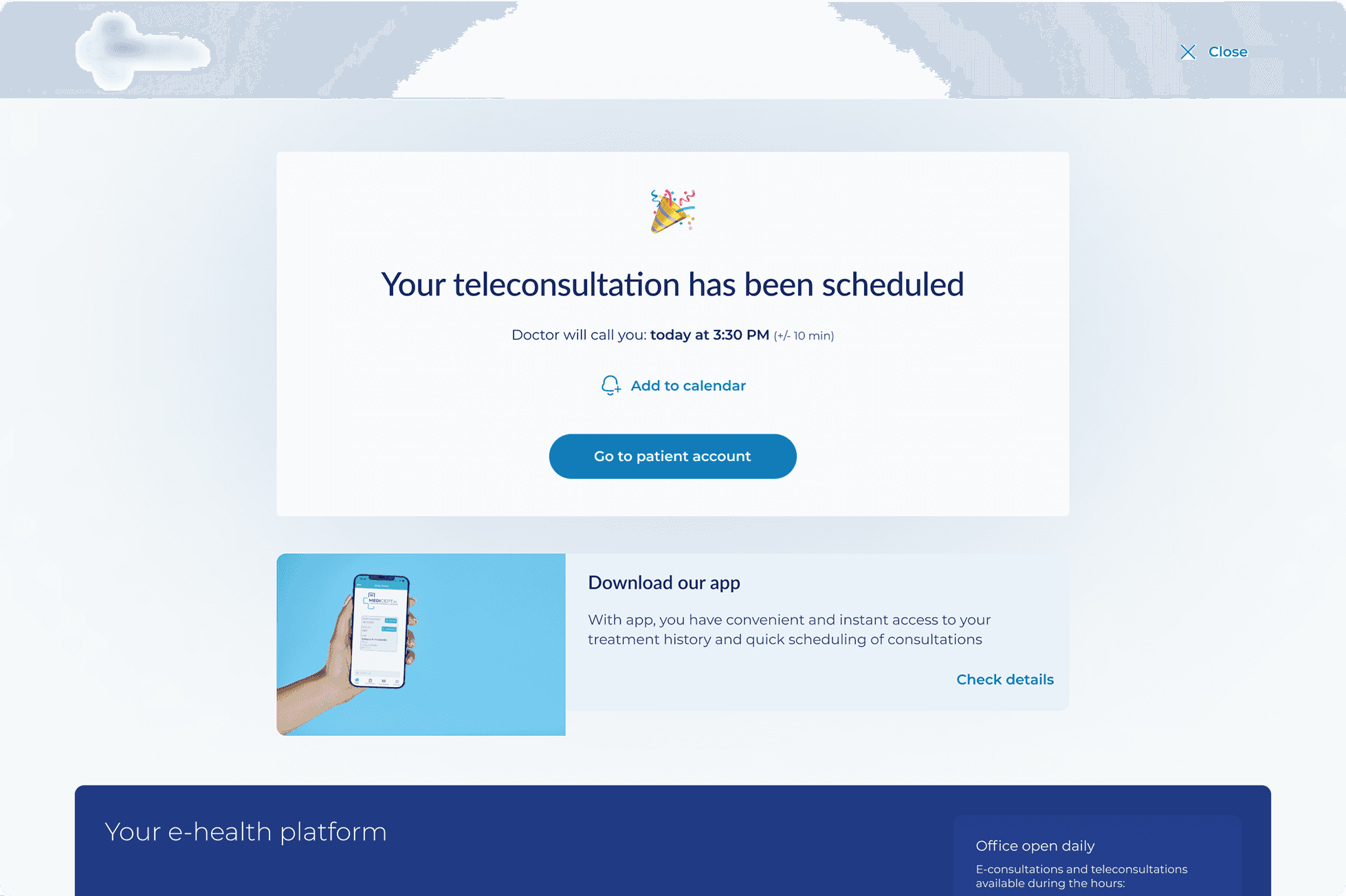
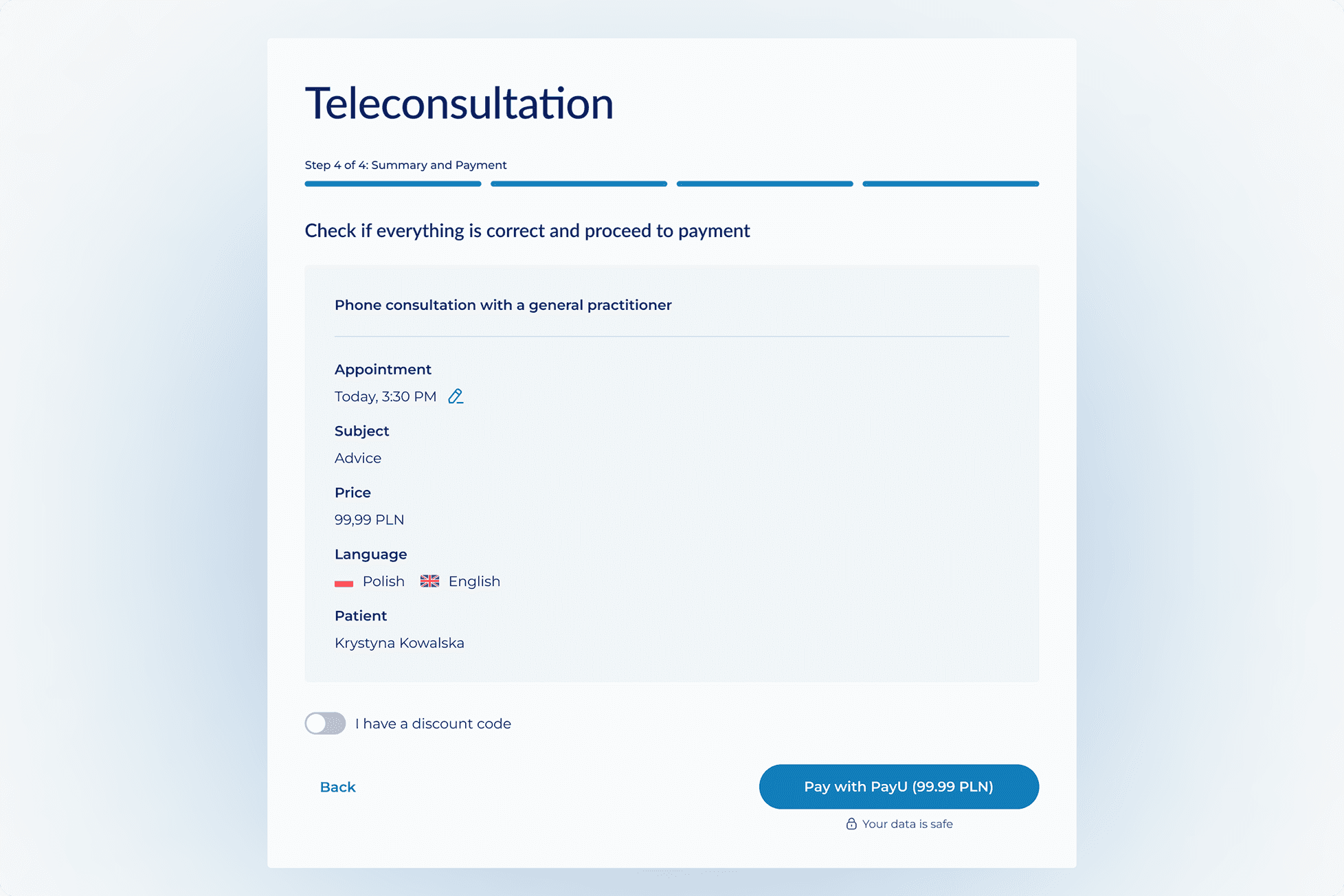
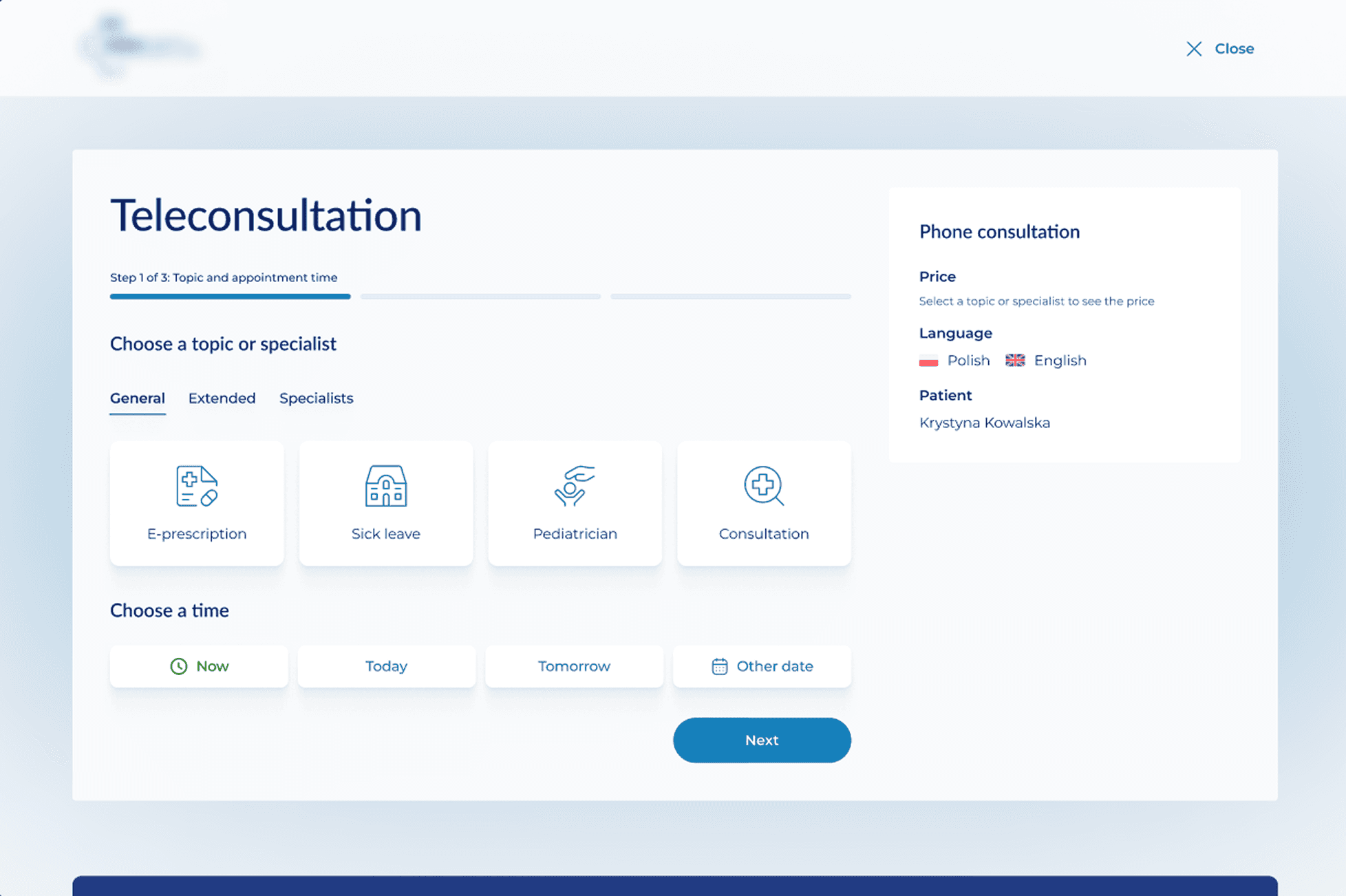
→ all services follow the same logic — from entry to completion
→ each step has a clear purpose and leads to the next
→ a repeatable structure enables faster decision-making
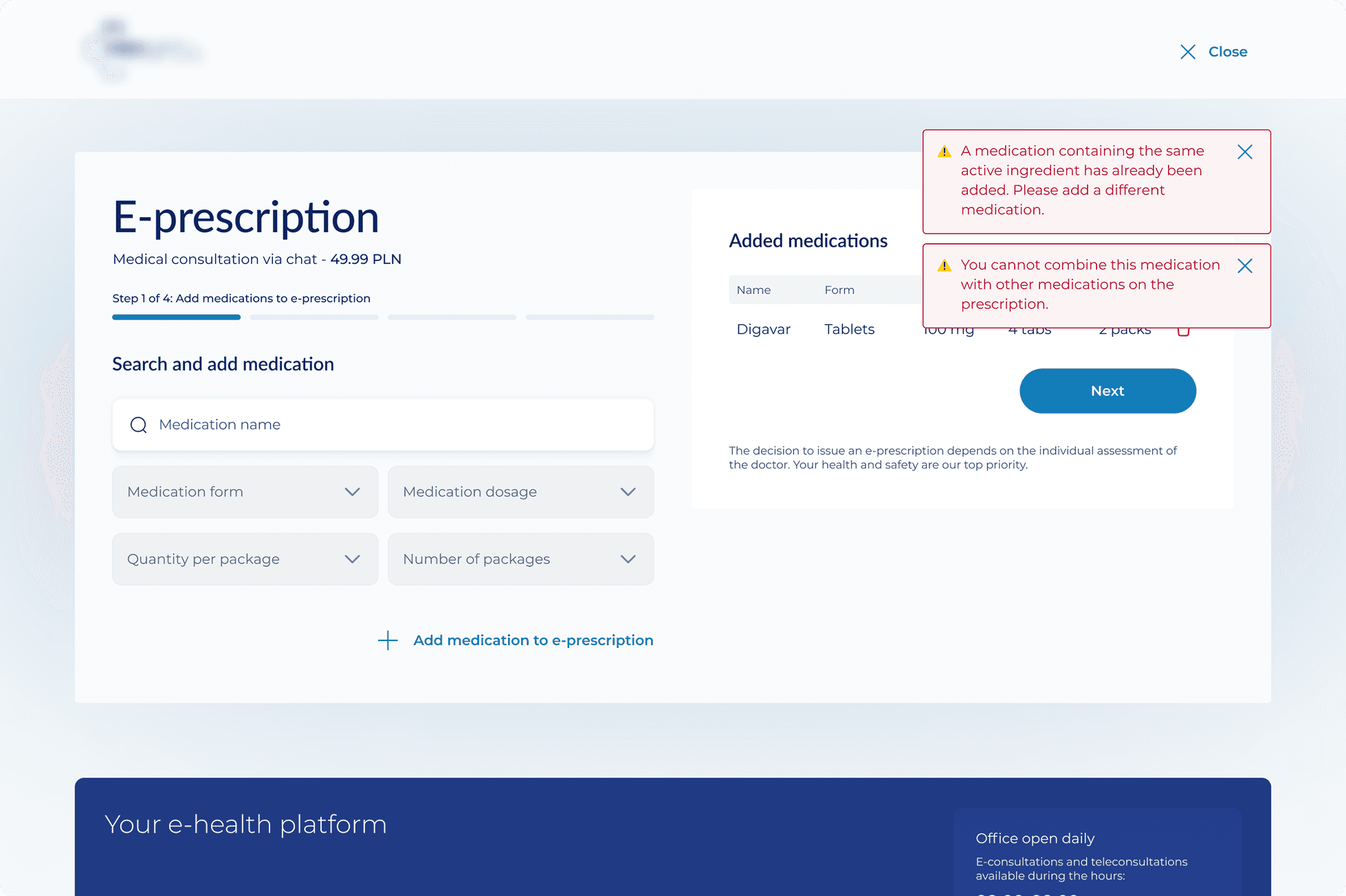
I built a system that guides users in real time.
Users didn’t know what was happening, what their actions would lead to, or what to do in uncertain situations. This led to drop-offs and frustration.
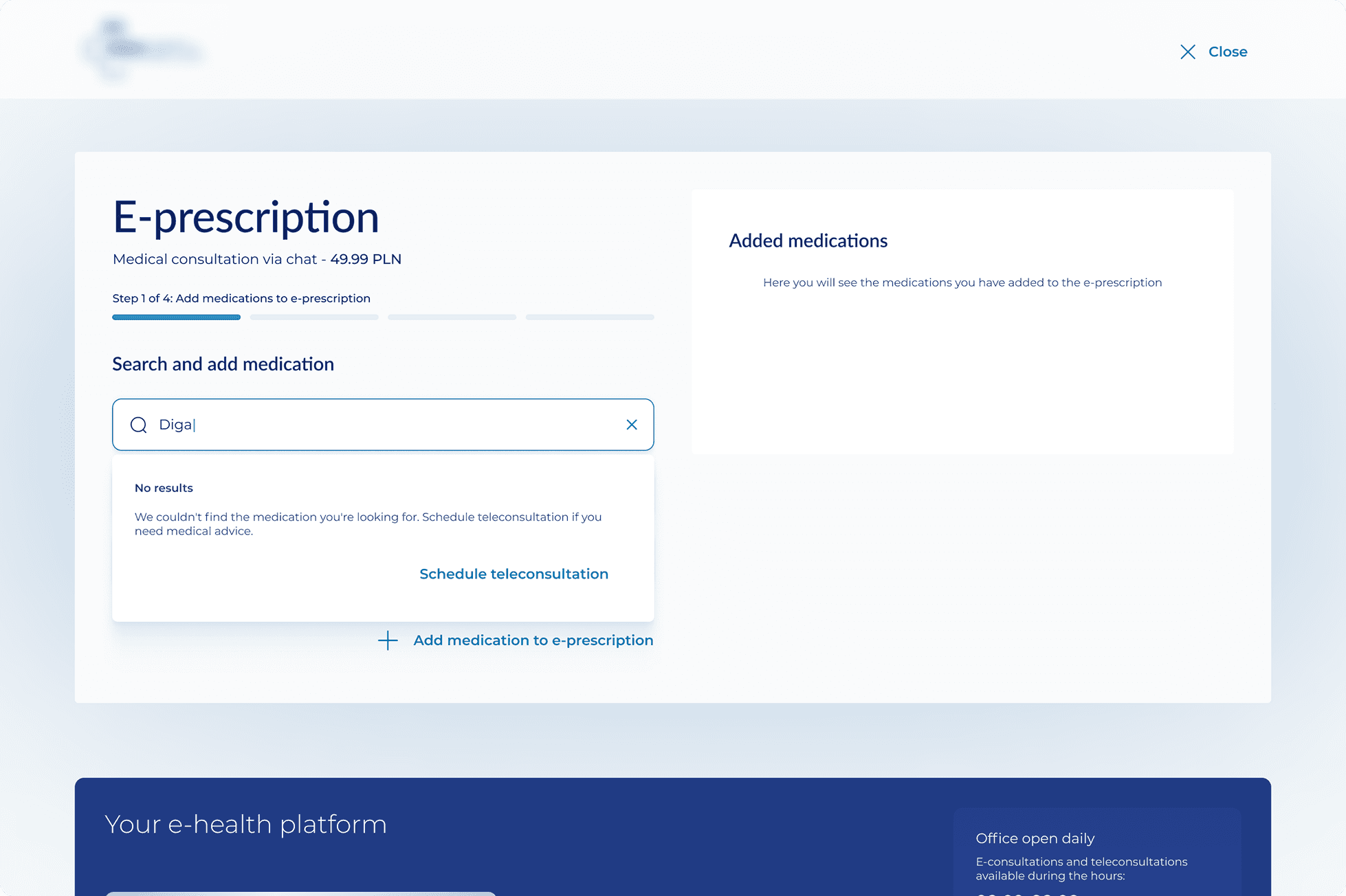
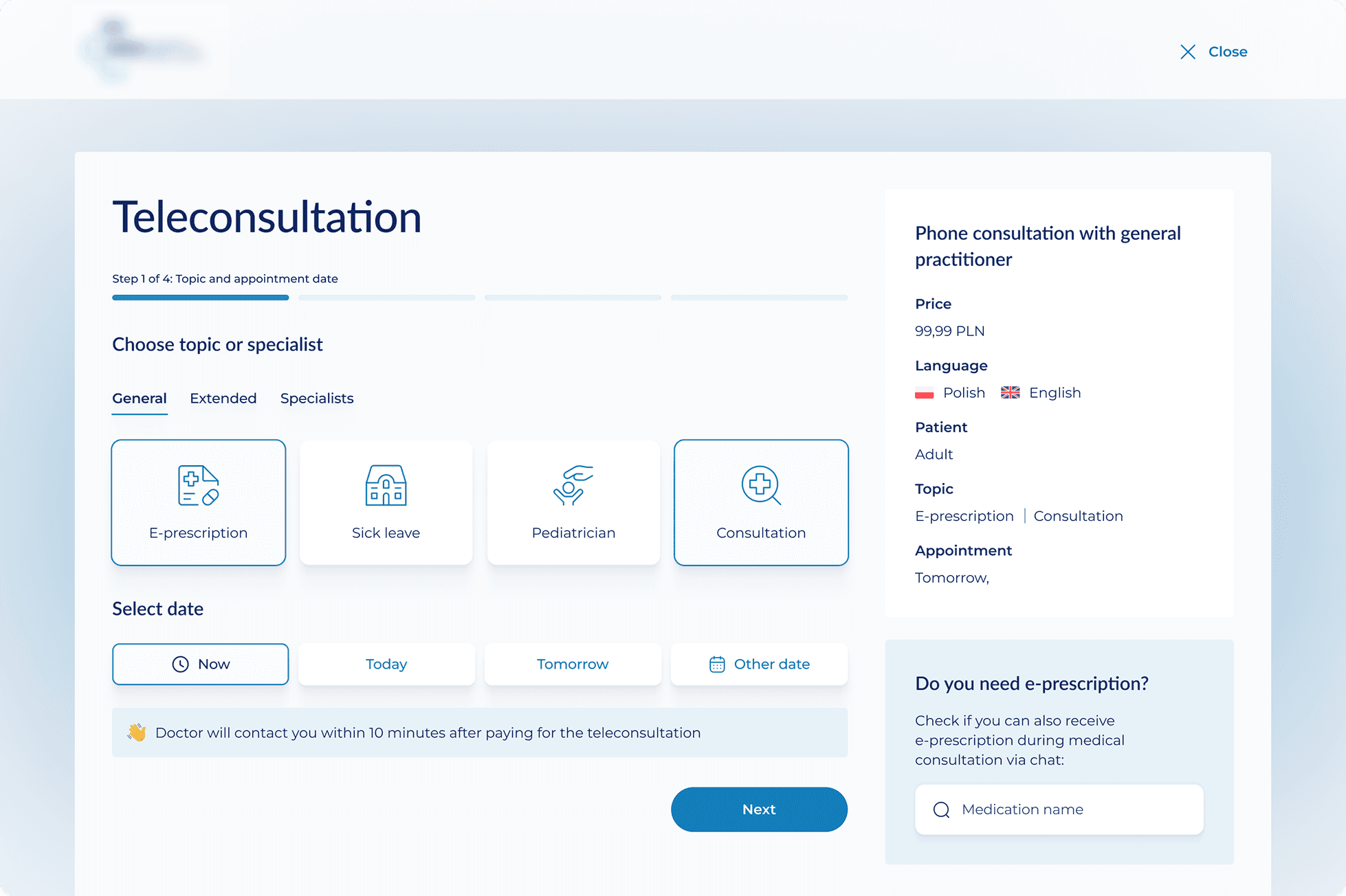
I built a system of contextual guidance and feedback that responds to user actions and prevents errors.
video
video
→ the system communicates the consequences of user decisions in real time
→ users receive clear guidance in uncertain moments
→ alternative paths are suggested instead of blocking progress
I introduced a central space that gives users control and continuity across the experience.
The user experience ended with each individual process.
Users had no access to their history, and each interaction was disconnected from the previous one.
I designed a patient account that allows users to manage their healthcare journey over time and return to it at any moment.
video
video
→ users can access their consultation history in one place
→ communication becomes part of a continuous process, not a one-off interaction
→ managing ongoing care becomes possible
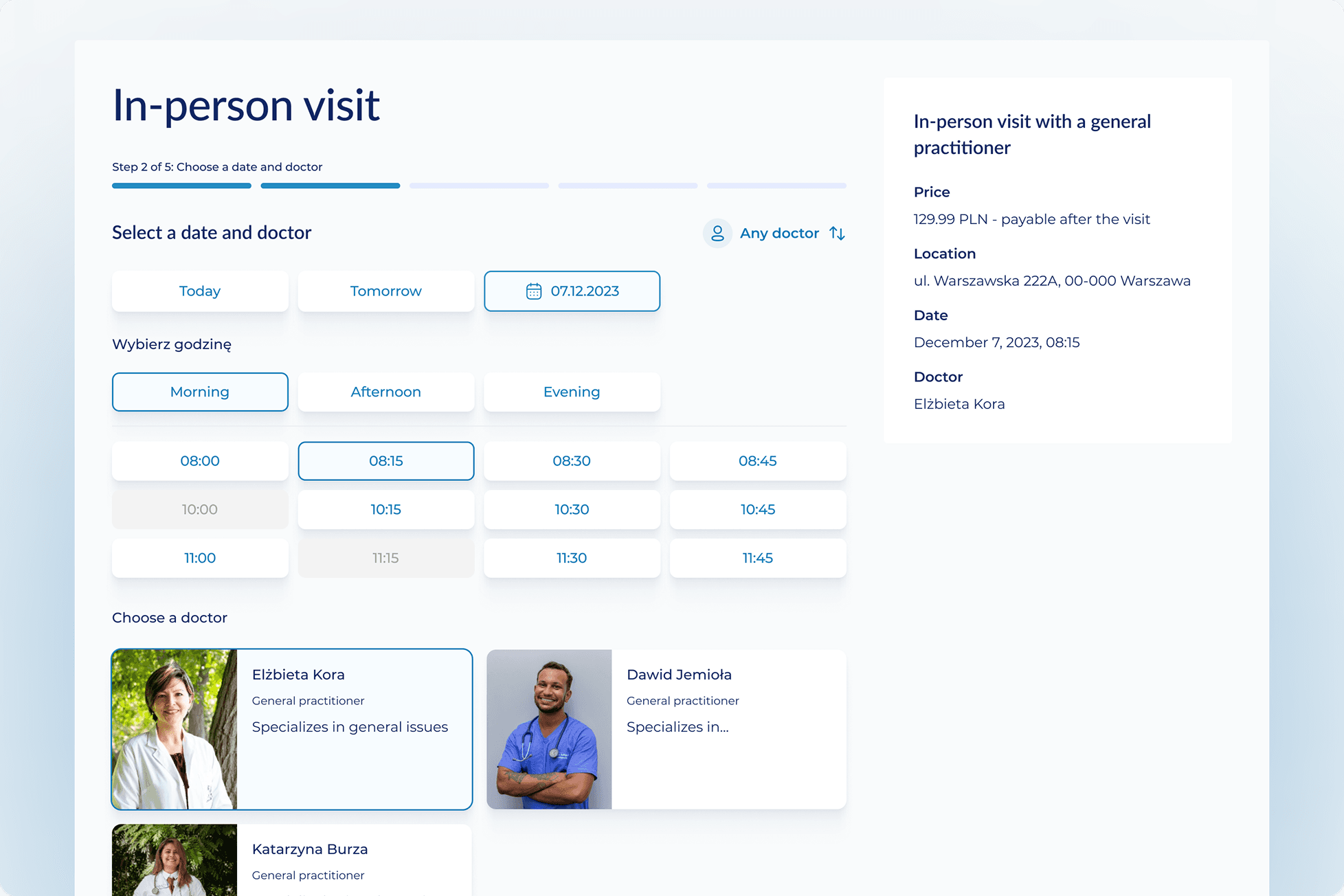
I created a structure that allows new services to scale without breaking the experience.
The platform kept expanding with new services and use cases, increasing the complexity of the experience.
I created a structure that allows new services to scale on the same experience logic.
video
video
video
→ every service follows the same entry and process structure
→ platform growth no longer increases experience complexity
I defined closure points that guide users into the next action.
After completing a process, users had no clear signal of what to do next. There were no moments encouraging users to return or continue using the platform.
I introduced closure moments that naturally guide users into their next actions.
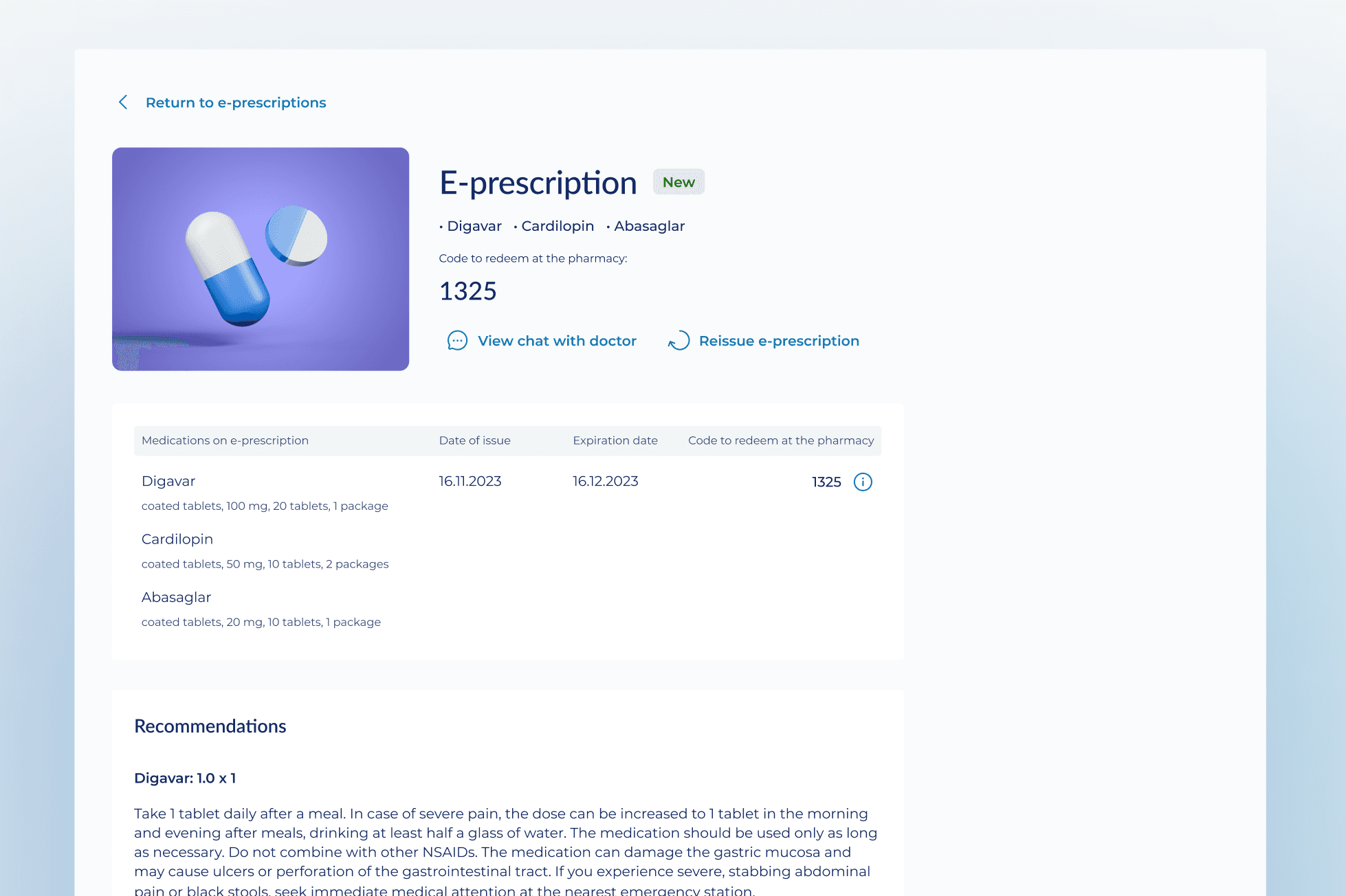
video
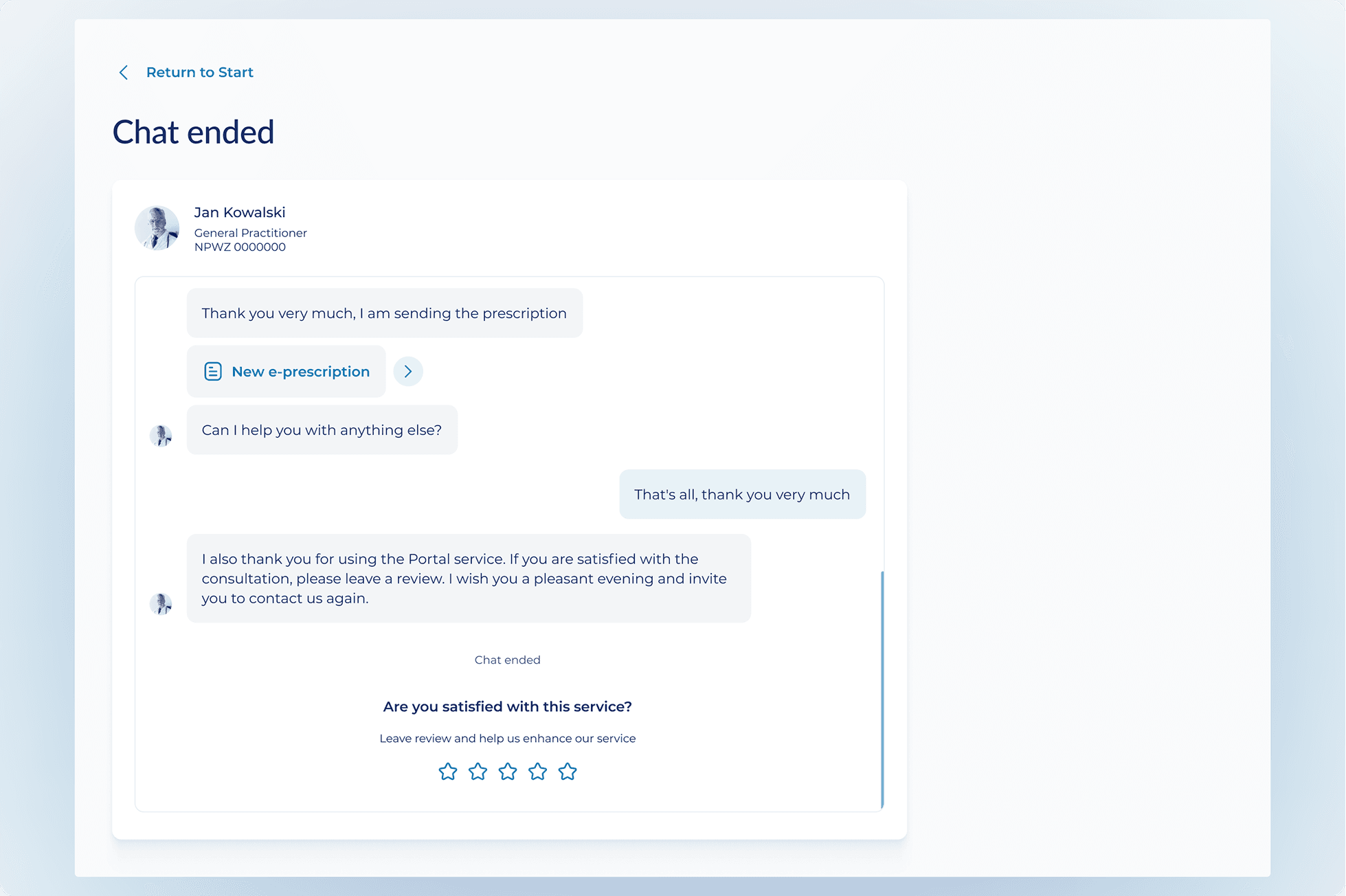
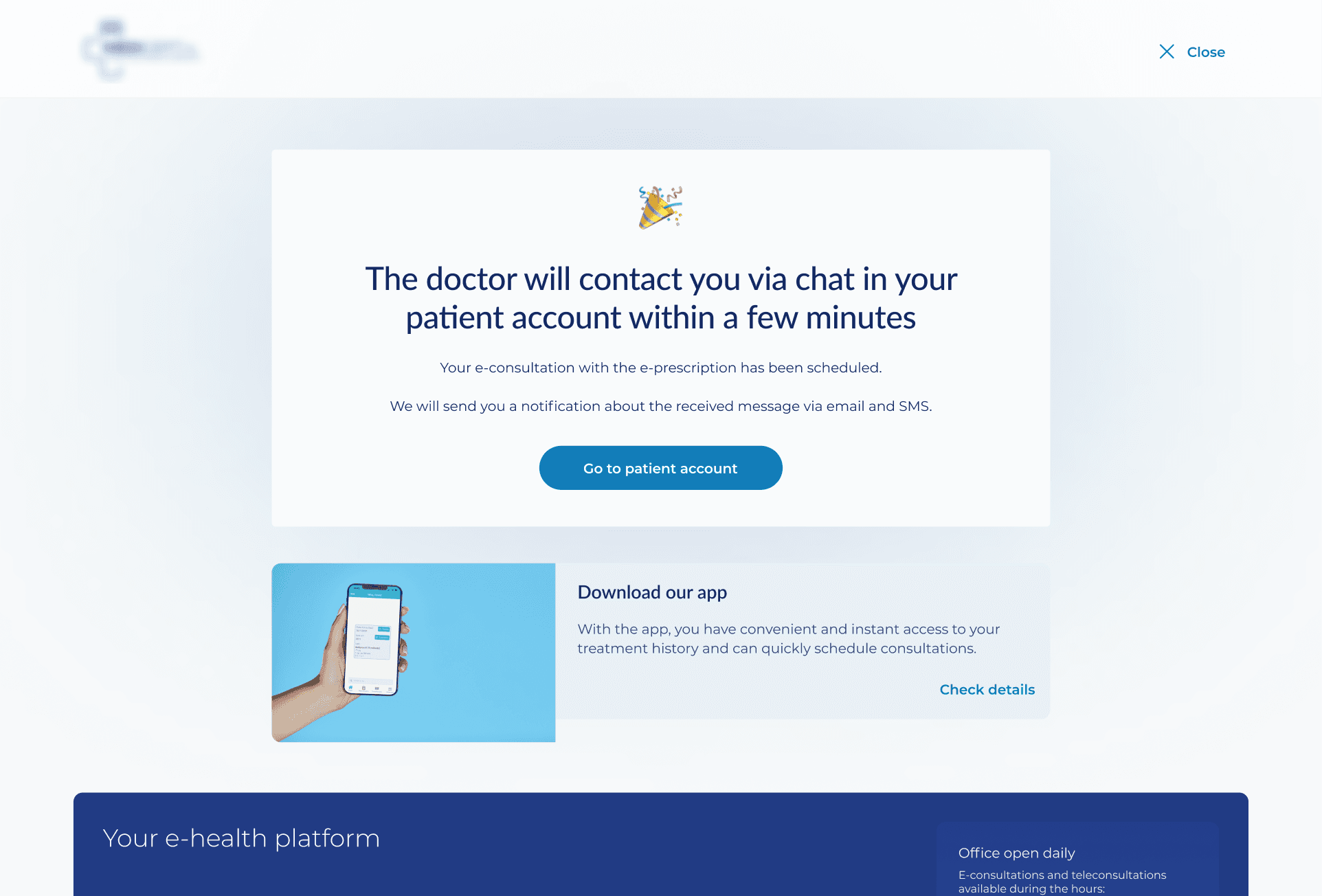
→ users receive a clear summary of what they’ve completed and what comes next
→ the end of a process becomes a natural entry point to the next interaction
→ the system suggests relevant next actions
→ returning to the service becomes effortless
The platform stopped being a set of fragmented processes.
It became a decision system guiding users through a coherent experience.
Instead of designing separate flows for each service, I created a foundation that guides users from first interaction to completion:
clear entry
decisions driven by context
guidance during the process
closure and next actions
I structured the architecture and user flows around the user experience, not features.
Features were organized around:
what the user wants to do
what they need to decide
what happens next
I created a single interaction model instead of multiple solutions.
Across all services:
users make similar decisions
the platform follows the same rules
The context changes, not the logic.
I designed a platform that responds to users in real time.
Instead of static screens, the system:
explains what will happen
shows consequences
reacts to errors
suggests next steps
The result was a system of over 500 screens.
They covered:
multiple scenarios
edge cases
error handling
contextual guidance
responsive layouts
All built on the same underlying logic.
As a result, users:
know where to start
understand what to do next
receive guidance during the process
can return to their actions
make fewer mistakes
feel more in control
New services:
follow the same logic
require no relearning
do not increase system complexity
This creates a foundation for improving conversion and retention.
As a next step, I recommended usability testing and A/B testing to validate the solutions in practice.
Due to external constraints, the product was only partially implemented, so its full impact couldn’t be measured.
Inconsistent screens are a symptom of missing decision guidance.
The biggest change wasn’t a redesign — it was structuring the logic of the experience.
Trust doesn’t come from UI.
It comes from understanding what’s happening.
Screens were translated into English for presentation purposes.